Microsoft Dynamics 365 SCM

Microsoft Dynamics 365 SCM is best suited for medium and large manufacturing, distribution, and logistics enterprises that manage complex supply chains.

Home

Products

MS Dynamics 365 ERP

SCM

Automation and Flexibility in Supply Chain Management

Robert Jachowicz 

SCM & Power Platform Team Leader

Supply chain management today is much more than logistics - it is a source of competitive advantage. Microsoft Dynamics 365 Supply Chain Management is an ERP solution that automates processes, increases flexibility, and delivers real-time insights, helping companies forecast demand, optimize operations, and shorten decision-making cycles.

Your Warehouse Operations
Under Full Control

Gain full control over every stage of the supply chain - from planning and forecasting, through inventory management, to logistics and production in real time.

Planning and Forecasting

AI and data analytics help you accurately forecast demand and optimize production.

Inventory Optimization

Minimize downtime and costs with intelligent warehouse and inventory management.

Production Automation

Integrate IoT and MES systems to maximize production efficiency.

Digital Logistics

Track shipments in real time and optimize transportation processes.

Process Optimization with Dynamics 365 SCM

Optimize your logistics and production processes through automation, realtime data analysis, and integration with the Microsoft ecosystem. Dynamics 365 SCM increases operational efficiency, reduces costs, and gives you full control over every stage of the supply chain.

Integration With the Microsoft Ecosystem

Power BI: Advanced financial analysis and reporting.
Dynamics 365 Finance: Full control over costs and cash flow.
Microsoft Teams: Real-time collaboration on financial data.

Intelligent Stock Management

Minimize stock-outs and overstock situations through accurate forecasting and automated ordering.

Logistics and Transportation Optimization

Monitor deliveries in real time, reduce transportation costs, and plan routes more efficiently.

Quality Control
in Dynamics 365 SCM

With properly configured test plans and inspection procedures, quality control stops being a separate process – it becomes an integral part of day-to-day operations in Dynamics 365 SCM. Our team implements best-practice quality controls across manufacturing, FMCG, logistics, and pharmaceutical sectors, so you can standardize procedures and scale them across all sites.

Real Time Quality Monitoring

Built-in Dynamics 365 SCM capabilities automate quality checks across your entire operational chain – from raw materials to finished goods. As a result, you reduce errors, minimize customer complaints, and accelerate your response to non-conformances.

Incoming Goods Quality Control

The system automatically creates quality orders at the moment of material receipt. Each batch follows an inspection flow aligned with your requirements, with the option to block, track, and escalate non-conforming stock before it reaches production or customers.

End-to-End Traceability

With serialization and full traceability, you can monitor every batch from production to shipment. This simplifies root-cause analysis, supports regulatory and customer-specific compliance reporting, and prepares your organization for demanding industry audits (ISO, HACCP, GMP).

Compliance with New ESG Regulations and EU Directives

With support from MS POS experts, you ensure regulatory compliance, automated sustainability reporting, and full control over the data that can determine your market position and legal risk.

ESG - Carbon Footprint, Transparency, and a Sustainable Supply Chain

Dynamics 365 SCM supports the collection of environmental, social, and governance (ESG) data directly within your operational processes - from purchasing to production and logistics. You can then report this data in line with EU requirements and your internal KPIs. 

CSRD – New Reporting Obligations for Medium and Large Enterprises

The CSRD (Corporate Sustainability Reporting Directive) significantly extends non-financial reporting obligations. With Dynamics 365 SCM, you gain access to real operational data – such as energy consumption, production efficiency, and purchasing data – that can be used directly in ESRS-compliant sustainability reports.

PPWR - Packaging and Waste: End of Manual Record-Keeping

Dynamics 365 SCM enables you to register detailed data on packaging types, materials, reuse, and recycling. The system supports EPR (Extended Producer Responsibility) documentation workflows and automates data collection for statutory and industry-specific reporting.

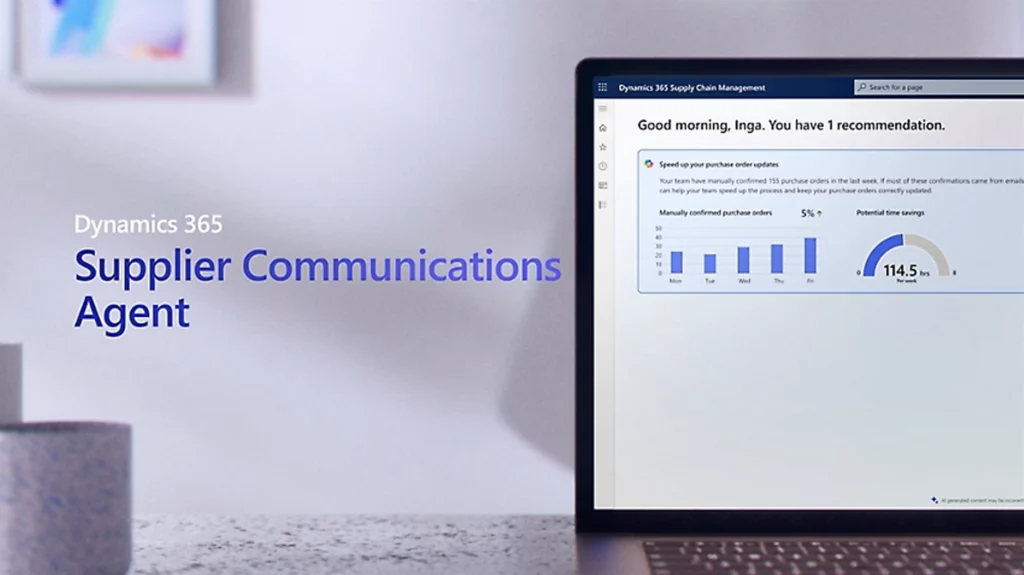
Improve On-Time Delivery with the Supply Management Agent

Manage communication with vendors autonomously to confirm order deliveries and proactively manage risk, preventing costly delays.

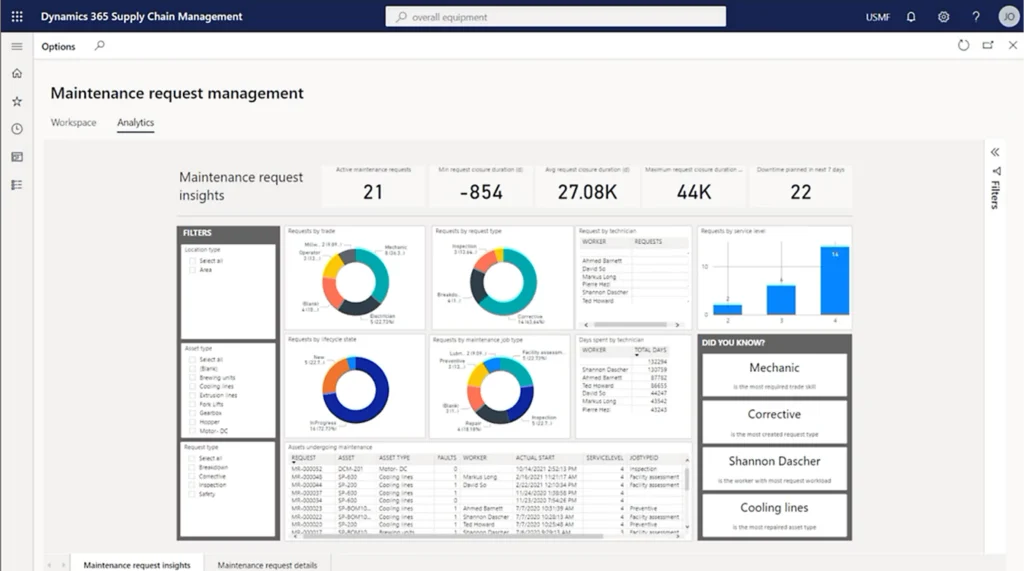
Advanced Maintenance Analytics in Microsoft Dynamics 365 SCM

Monitor and analyze service request and maintenance data in real time with Microsoft Dynamics 365 Supply Chain Management. Built-in analytics tools enable you to track active work orders, repair times, technician workload, and the most common root causes of failures. Intelligent reporting and visualizations support better decision-making, optimizing maintenance processes and minimizing downtime.

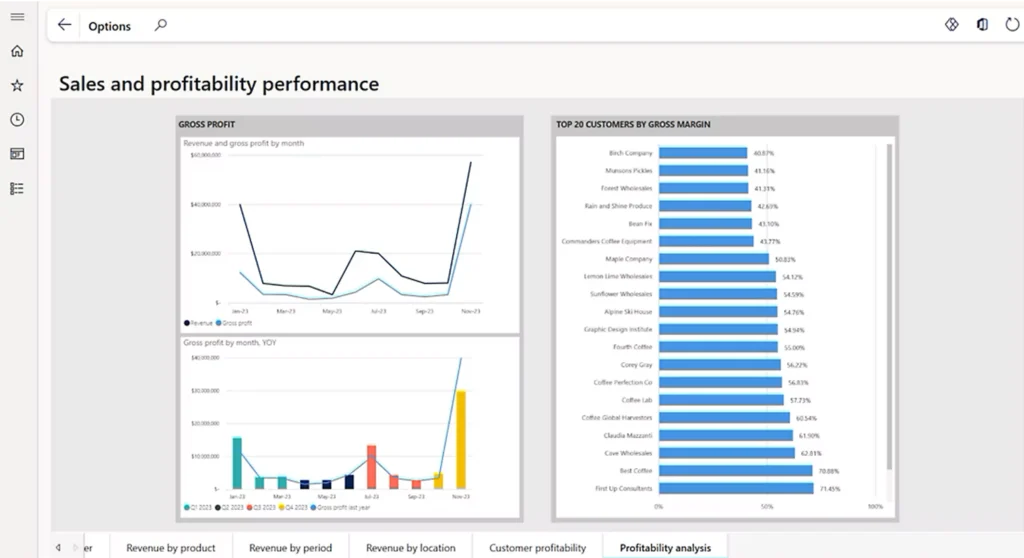
Sales and Profitability Analysis in Microsoft Dynamics 365 SCM

Track sales performance and profit margins in real time with Microsoft Dynamics 365 Supply Chain Management. Intuitive dashboards provide full visibility into key metrics, allowing you to identify your most profitable customers and products. With dynamic reporting and trend analysis, you can plan pricing strategies more effectively, optimize your product portfolio, and increase overall profitability.

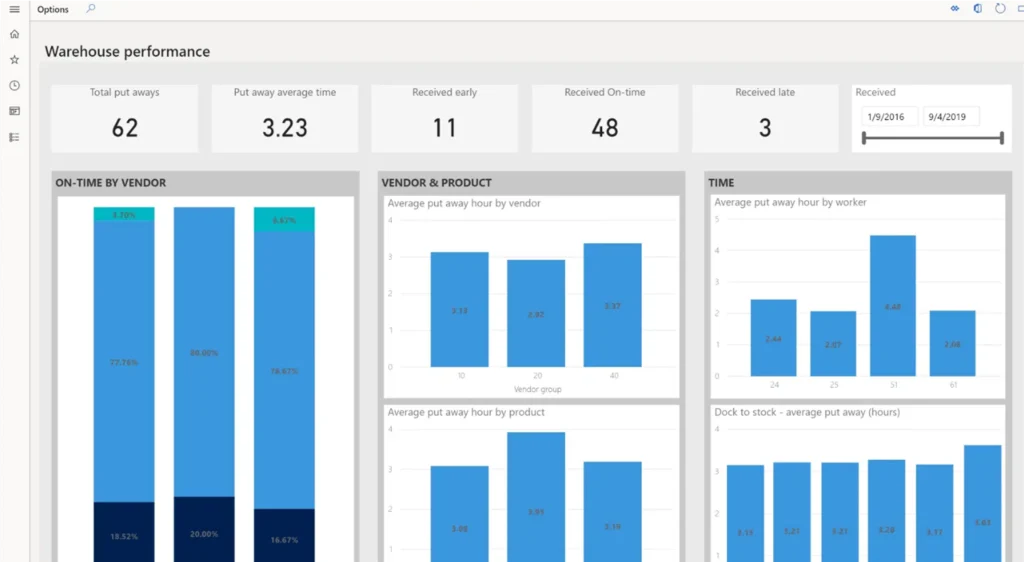
Optimize Warehouse Performance with Microsoft Dynamics 365 SCM

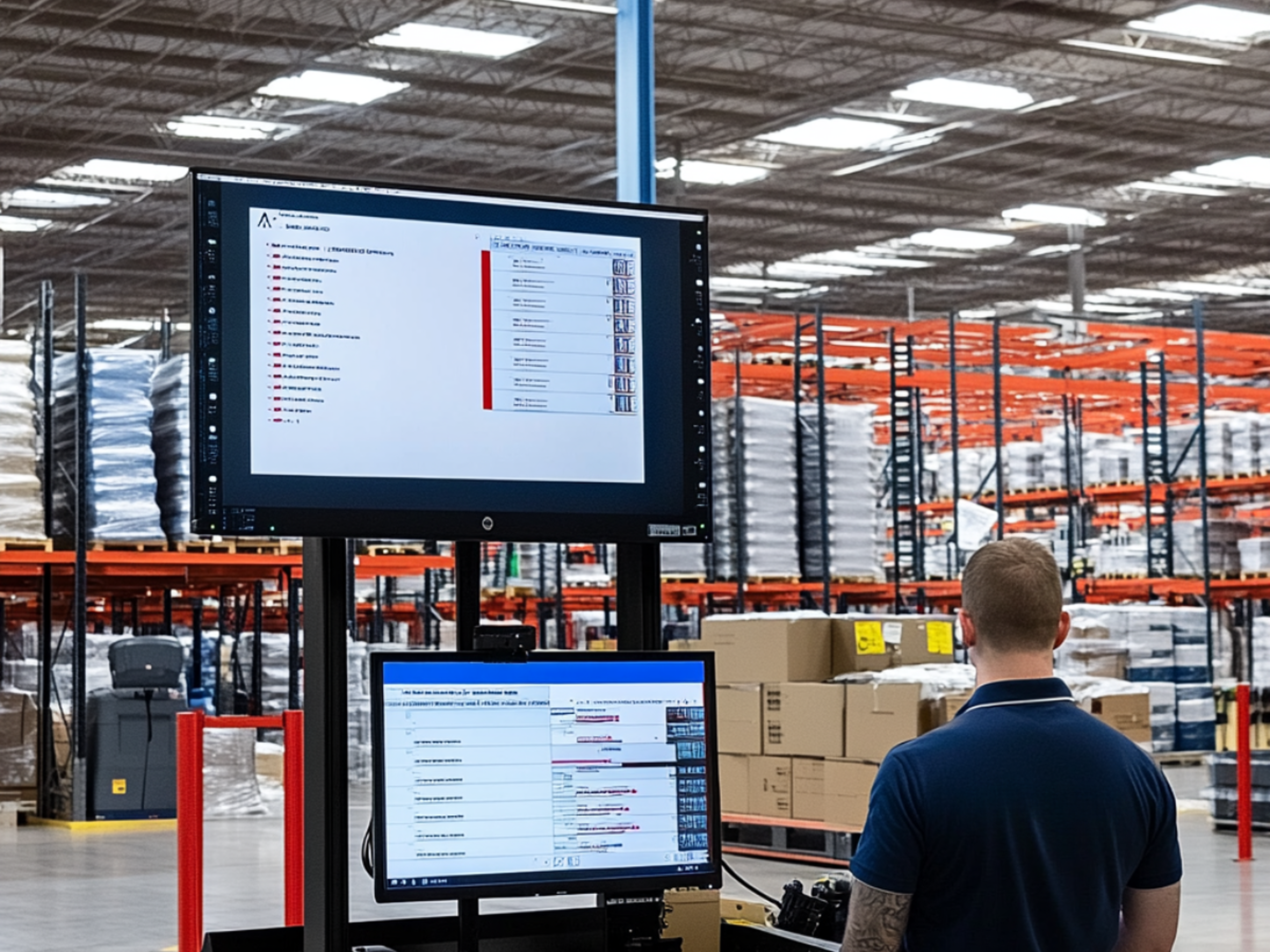
Effective warehouse management requires full control over goods flow and team productivity. Microsoft Dynamics 365 Supply Chain Management provides insight into key metrics such as on-time delivery rate, average storage time, and workforce efficiency. Better organization of operations helps eliminate delays and optimize logistics processes, increasing the overall agility of your supply chain.

5-Step Implementation Process

We ensure a smooth integration of Microsoft Dynamics 365 SCM and a rapid path to
full warehouse functionality.

Process Audit and Mapping

We start with a detailed analysis of warehouse operations, mapping and standardizing processes based on the Microsoft business process catalog.

Solution Design and Configuration

We tailor Dynamics 365 SCM and build Power Platform extensions, integrating the system with ERP and IoT without modifying the core system

Data Migration and Test Automation

We securely transfer key data, configure inventory structures, and run automated tests that verify end-to-end process correctness.

Team Training and System Go-Live

We conduct practical workshops for warehouse staff and management, followed by a controlled go-live in the real operational environment.

Optimization and Post-Go-Live Support

We monitor performance indicators, support your continuous improvement initiatives, and provide ongoing technical and advisory support.
Frequently Asked Questions

How much does it cost to implement Microsoft Dynamics 365 SCM for the warehouse operations?

The implementation cost depends on the size of the database, the number of users, and the level of integration with other systems. Companies can rely on a subscription-based model, support for development and improvement initiatives, and training delivered as part of the project.

Manufacturing, distribution and logistics companies with a high inventory turnover, that require precise warehouse control and process optimization, will benefit the most.

The implementation timeline depends on the scale of the pro ject, but standard deployments usually take from a few to several months, depending on the scope of configuration and testing. MS POS shortens this timeline by standardizing processes in line with Microsoft recommendations.

The system makes it possible to track KPIs such as inventory turnover, on-time delivery, order fulfillment time, inventory accuracy, and the cost of handling a single stock-keeping unit.

Using artificial intelligence and historical data analysis, the system can forecast demand, identify stockout risks, and automate purchase orders to suppliers.

Talk to Our Expert

Contact us and let us build things together.

I accept the terms and conditions*

Also check

Microsoft Power Platform

Microsoft Dynamics CRM

Polish Localization Package